
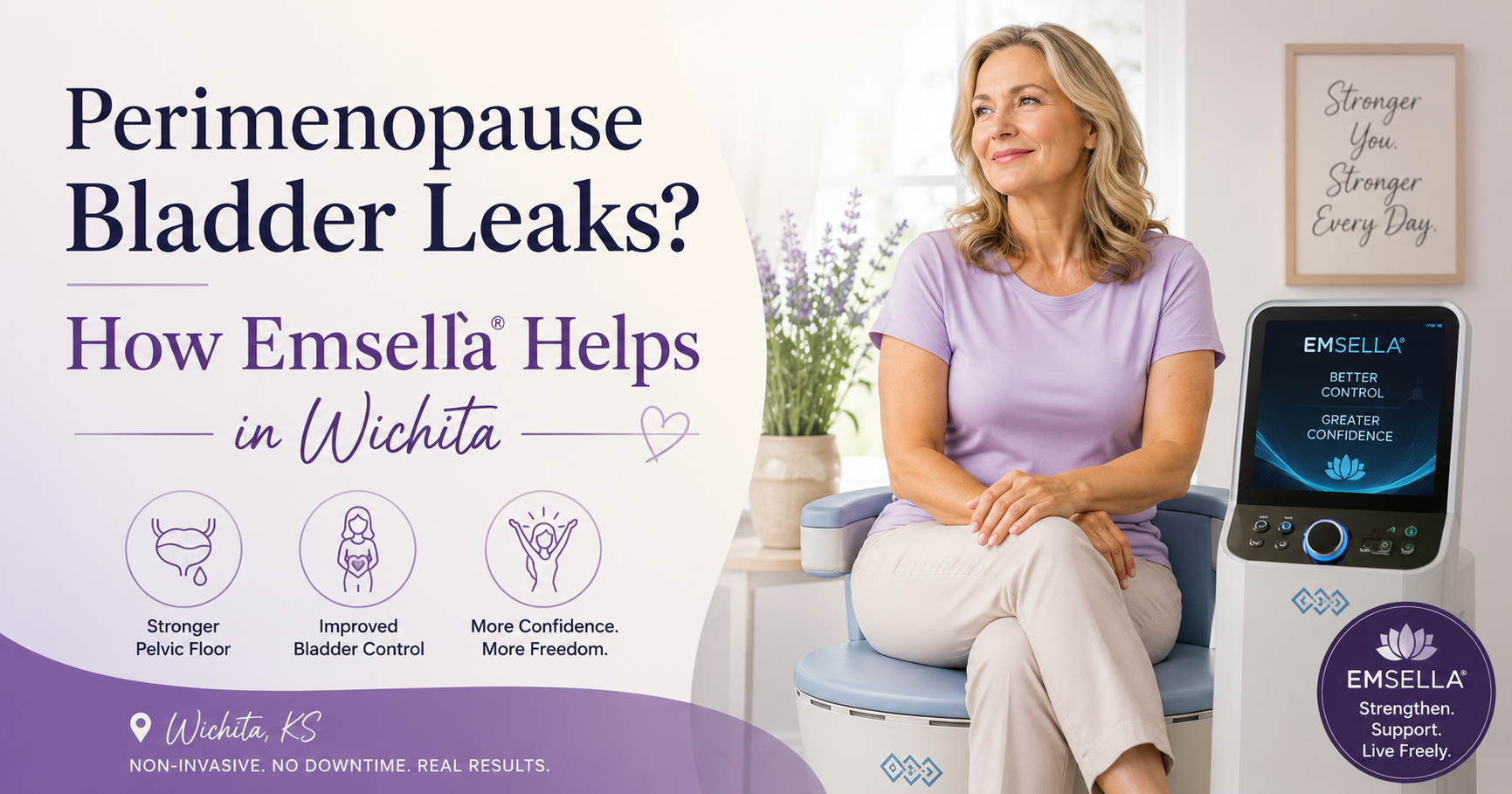
If you have started leaking when you sneeze, jog, or laugh; noticed urgency that wasn't there before; or felt changes in intimacy that you cannot quite explain, perimenopause is often the reason. None of these are things you have to live with, and they don't mean surgery is your only option. Emsella at Restore Body Balance in Wichita offers a non-invasive way to rebuild pelvic floor strength, even through the hormonal changes of midlife.
Why Perimenopause Weakens the Pelvic Floor
The pelvic floor is a group of muscles that supports your bladder, uterus, and bowel. Like every muscle in the body, it depends on hormones, blood flow, and use to stay strong. In perimenopause, three things happen at once:
- Estrogen declines. Estrogen plays a role in keeping pelvic tissues elastic and well-supplied with blood. As it falls, those tissues become thinner and less resilient.
- Collagen production slows. Collagen gives tissues firmness. Less collagen means less support for the pelvic floor and surrounding structures.
- Life stress compounds the problem. Sleep changes, weight shifts, and decades of pregnancies, deliveries, or heavy lifting all add up.
The result is symptoms that often surprise women in their 40s and 50s: leaks during exercise, sudden urges to find a bathroom, less satisfying intimacy, and sometimes a vague lower back or pelvic discomfort that wasn't there before.
Symptoms That Go Beyond Bladder Leaks
Bladder leaks (called stress incontinence and urge incontinence) get the most attention, but the pelvic floor affects much more. Common perimenopausal symptoms tied to a weakening pelvic floor include:
- Sudden, urgent need to urinate, sometimes without much warning
- Waking up at night to use the bathroom
- Less sensation or less satisfaction during intimacy
- Feeling of heaviness or pressure in the pelvic area
- Low back or hip discomfort that does not respond to stretching
If any of these sound familiar, you are not alone. National surveys suggest that more than half of women over 40 have at least one pelvic floor symptom, and most never bring it up with their doctor.
How Emsella Works
Emsella uses high-intensity focused electromagnetic energy (HIFEM) to stimulate the pelvic floor muscles. You sit, fully clothed, on a chair that delivers thousands of supramaximal contractions during a single session. In 28 minutes, the chair triggers roughly 11,000 contractions, which is more than you could ever do on your own with Kegels.
Because the contractions are involuntary and reach deep muscles that voluntary exercise often misses, Emsella retrains pelvic floor strength in a way that physical therapy alone often cannot match. You read a book, scroll your phone, or talk with the provider. There are no needles, no undressing, and no recovery time.
What Results Look Like and How Soon
Most patients begin to notice improvements after the third or fourth session. The standard protocol is six sessions, scheduled twice a week over three weeks. Results typically include:
- Fewer leaks during exercise, sneezing, or laughing
- Reduced urgency and fewer nighttime bathroom trips
- Improved sensation during intimacy
- A renewed sense of core support
Maintenance sessions every few months help preserve those gains, especially through the most active perimenopausal years.
Combining Emsella With Other Treatments
Emsella often works best as part of a wider wellness approach. Many of our patients pair it with:
- Emsculpt NEO for core and glute strength, which supports the pelvic floor from above
- Exion Body for skin tightening on the abdomen, especially after pregnancy or weight changes
- Hormone management with your primary doctor or OB-GYN
- Pelvic floor physical therapy when targeted retraining is also needed
Emsella is not a replacement for medical care. It is a tool that fits alongside the rest of your perimenopause plan.
When to Talk With Your Doctor First
Most women are good candidates for Emsella, but you should check with your physician first if you:
- Have a pacemaker, defibrillator, or other implanted electronic device
- Are pregnant or trying to become pregnant
- Have metal implants in the pelvic area
- Have a recent pelvic surgery or active pelvic infection
During your consultation at Restore Body Balance, we review your medical history and confirm Emsella is a safe fit before booking treatments.
Frequently Asked Questions
Is Emsella only for women?
No. Men also experience pelvic floor weakness, often after prostate procedures or simply with age, and Emsella treats both. Sessions are private and discreet.
Do I have to undress for the treatment?
No. You sit on the chair fully clothed throughout the session. The only thing we ask is that you not wear belts, buckles, or large metal jewelry that could interfere with the device.
Is Emsella painful?
No. You will feel strong contractions in the pelvic floor, which can be surprising at first but is not painful. Most patients describe it as oddly satisfying, like a deep workout for muscles you cannot normally activate on demand.
How long do results last?
Results from a full protocol of six sessions often last six to twelve months. Periodic maintenance sessions (one to two per year) help preserve gains long term.
Is Emsella the same as Kegels?
No. Kegels target the muscles you can consciously contract. Emsella reaches deep pelvic floor fibers that voluntary exercises typically miss, and triggers many thousands of contractions in a single session. The two complement each other.
Ready to take perimenopause symptoms off the daily worry list? Book a consultation at Restore Body Balance in Wichita.